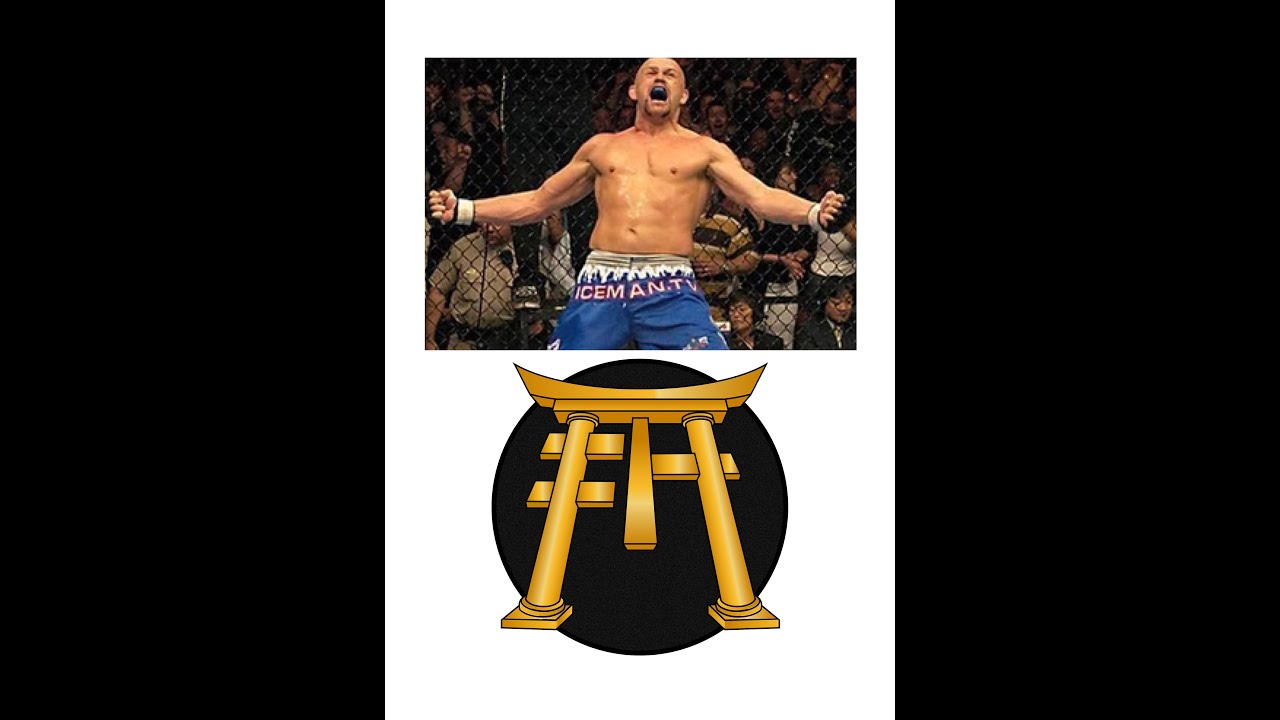
Lol it’s honestly not a bad deal for how obscure it is, and I don’t even collect in any capacity.
I’m curious to know what else is on there.
Lol it’s honestly not a bad deal for how obscure it is, and I don’t even collect in any capacity.
I’m curious to know what else is on there.
By this point it’s obvious that Georges is a smart dude who understood that intelligence is just as important as technique and skill in a fight. During his first fight with BJ Penn at UFC 58, a fight he won, he took a lot of damage. After St. Pierre’s win over Jon Fitch at UFC 87, BJ got into the cage to promote a rematch. The fight was set for UFC 94 in January of 2009. In discussions with his coaches during the preparation for the rematch with BJ Penn, Georges said that BJ had speed beyond belief, and that he had trouble dealing with that speed, and struggled to find the target of BJ’s face. At that point, his head coach Firas Zahabi hired a data analyst, who studied fighters and their reaction times. According to him, out of all the fighters he studied, BJ Penn had the fastest reaction time. St. Pierre wanted to make this fight completely different from the first one, a desire to win by pure dominance, leaving no doubts about who was the better fighter. Georges and Firas came up with a strategy of feinting a lot, using a larger variety of weapons, and firing blanks. The idea behind doing this was to overload the nervous system of BJ Penn by making him think and react to what Georges was doing, therefore tiring him out and dragging him into deep waters. Anyone who knows BJ Penn as a fighter and is familiar with his tendencies would tell you this is a smart strategy for beating a prime BJ - as good as any fighter we’ve ever seen at lightweight.
As for St. Pierre, he sought to sharpen his fighting mentality by putting stark focus on something only the special ones do - becoming psychologically bulletproof. As a kid, Georges trained in Kyokushin Karate to deal with school bullies. As a result he became enthralled by the idea of being the strongest kid in school, even holding the chin-up record at his high school, École Pierre-Bédard. This interest carried over into college, where Georges studied kinesiology. He was a black belt in Kyokushin by the age of 12, and modeled himself after Jean-Claude Van Damme. I think we can all agree that getting a black belt at the age of 12 is a little concerning, particularly in the age of McDojos. In St. Pierre’s case, though, we can rest our little heads at night knowing that the black belt he received wasn’t the result of a bribe. In his late teens he started training in wrestling, something he had never done before. I repeat, he had NEVER wrestled a day in his life. Georges worked with Victor Zilberman and Guivi Sissaouri extensively, the latter of which captured multiple world championships in freestyle wrestling, even winning a silver medal at the 1996 Olympics. By the time of St. Pierre’s debut in MMA in 2002, he was regularly outwrestling guys who had been wrestling for years. He even used his wrestling against Justin Bruckmann in his second professional fight to win the UCC Welterweight Championship. This was but a narrow glimpse of the man who would form a legacy that even the widest of lenses couldn’t capture.
Not even close.
By Georges’ third professional fight, he was already being cheered on like a superstar. His opponent, Travis Galbraith, was a perfectly respectable fighter on the Canadian scene, going 5-1 and earning a spot in the UCC. The fight results show a win by TKO via elbows, but those weren’t just any elbows. Georges had Travis in side control and was posting his forearm on Travis’s chin, slamming his head to the canvas. So when his head hit the mat, not only was he taking the force of the elbow on his chin, but he was taking the force of the mat on the back of his head. In order to get Travis to the ground, GSP employed an unconventional tactic - a high crotch double leg is common in MMA, but the way he did it is not. The takedown Georges utilized is called a snag double leg. This technique is a bit different from other doubles in the sense that instead of driving forward with your hips and creating an angle, you’re using your head to drive into your opponent’s chest to push them forward, while also pulling their legs towards you, essentially sweeping their feet out from underneath them. What makes this double leg effective for MMA is its lack of set up - it only requires close proximity, as your knee doesn’t need to drive into the ground like it does with traditional wrestling takedowns. This worked perfectly for GSP, who simply caught Galbraith’s kick and used it to grab both legs. Simplicity at its best. Two fights later against Pete Spratt, the kick catcher strikes again. This time in the form of a snatch single leg, followed by complete domination on the ground. Pete standing up only tightened the choke, and GSP got his Goldenpalace.com finish in less than four minutes.
I realize the title of this article gives off the impression that I’m only talking about one particular fight. The problem is when I started writing this article, I just couldn’t stop my wandering brain, and my obsessive nature took over. It isn’t even me typing [write] now. Ultimately I’m a massive fan of Georges St. Pierre, and I think he’s the best fighter in MMA history, and one of the most important supercomputers ever created with the intention of destroying elite cage fighters. I will get to his masterclass over Bisping, but I’ll cover some other big ones first.
TEATEE
Georges IS the Ultimate Fighter. After dominating Pete Spratt, he got a call from the UFC. And boy there were no easy fights in the UFC back then. Karo Parisyan is a hell of a UFC debut for anyone, at any point in his career. 2004 was also Joe Rogan’s peak Karo Parisyan-fandom, and it took him some time to settle in that night and realize just how good GSP was. After Karo aggressively threatened Georges with an armbar, he spent the rest of the first round on his back taking punches and elbows. Halfway through the second round it becomes obvious that St. Pierre isn’t going to magically give the fight to Parisyan, and the latter is simply unable to deal with the top control of Georges. Karo threatens a kimura using a Hikikomi Gaeshi, using his right foot to “hook” GSP’s hips and pull him backwards, flipping him onto his back. Karo’s hopes of winning the fight really ended with this exchange, Parisyan succumbing to the world’s most dangerous supercomputer. I cannot stress just how good Karo Parisyan was during this period of time, and after this loss, he went on a massive run at 170, and the only thing that stopped him from fighting for a title was injuries. What was telling for me in this fight was not only St. Pierre’s complete dominance, but Karo’s inability to overcome his own fear of the takedown. It was completely out of character for him at the time to be inactive on the feet and yet in the last two minutes of the fight, Karo threw almost no strikes and not only lacked the killer instinct of a fighter who needed a finish to win, but lacked the spirit of the Parisyan we came to know and love. That tells me that GSP broke him mentally, and Karo simply could not perform like himself due to that fear.
After obliterating a young and talented Jay Heiron, GSP would face Matt Hughes for the first time. The UFC Welterweight division was looking to crown a new champion after BJ Penn left the organization to fight in K-1. At UFC 50, Georges St. Pierre got his opportunity to be that guy.
Hughes gets a single leg.
GSP rolls his eyes as John McCarthy yells “work!”, with GSP holding a kimura grip on Hughes’ right arm, and the latter’s arms locked around GSP’s torso. St. Pierre turns and puts his fingers in the cage to reverse Hughes and get up, but soon, that would be but a tiny victory. GSP lands a spinning back kick which briefly hurts Hughes, but otherwise, Matt is pressing the action and looking for his opportunities.
One minute left and Hughes has obtained side mount, and things start to look better for GSP once they get off the cage. But not for long. Since Georges allowed Matt to retain a ¾ guard, it’s easier for Hughes to pass. GSP starts shrimping to avoid the punches of Hughes, then looks for a kimura grip on Hughes’ right arm. In doing so, he acquiesces his attention to offense, and forgets he has a world class grappler on top of him. With St. Pierre so focused on his kimura grip, he no longer has hands to frame or defend what’s coming next. Hughes steps over GSP’s guard by elevating his hips, and rotating to his right. Here’s where the slickness comes in. Hughes continues rotating and uses GSP’s own kimura grip to rotate his own right arm to grab Georges’ right wrist, and sits down on GSP, locking in an armbar. St. Pierre taps with exactly 1 second left in the round, and loses his first UFC title shot, and his first fight.
In boxing, fighters are often discarded by promoters, fans and friends after losing their first fight. Boxers often have to change a lot about who is around them after they lose, causing them to question everything they have done up to that point. For Georges St. Pierre, this was only the beginning. GSP rattled off a staggering 5 straight wins that showed not only his rapidly developing skills, but his complete and utter superiority to anyone not named Matt Hughes. GSP had to beat just about every top guy at 170, including Sean Sherk, who was only making his way back to the UFC after losing to Hughes himself in 2003. Georges did everything he needed and more to earn his shot. And he would get it at UFC 65. With 2 impactful dick kicks and 1 huge high kick, St. Pierre got the job done, taking the torch from Hughes and solidifying himself as the best welterweight in the world. My personal favorite part of his performance is when Hughes starts lifting his lead leg up to check the low kicks of GSP, but Georges instead steps in and brutalizes his rear leg instead. A testament to the GSP’s endless bag of tricks, his scholarly approach to fighting, and Rob Kaman shadowing.
At UFC 69, Matt Serra pulled off the biggest card trick in the sport when he stopped GSP by strikes in his first title defense attempt, landing enough right hands to knock out a horse and giving Dana White one of the biggest “HOLY SHIT” moments of his career in the UFC. Famously and humbly calling Georges “the future of the sport”, Matt Serra lost that shiny belt at UFC 83 when St. Pierre absolutely crushed him on the ground, taking that championship back and never losing it again. Ever the intelligent fighter, Georges did very little standing with Serra and double legged him until he didn’t get back up. This is where GSP really began his absolute prime. Moving gyms from the Renzo Gracie Academy in New York to Tristar in Montreal proved to be pivotal for him, as he started working under Firas Zahabi, and the two developed a coach-fighter duo ala Roach-Pacquiao.
GSP’s first title defense was top contender Jon Fitch. Forgotten amongst contemporary knuckleheads and polarizing to those of his own era, Fitch was a dominant force at 170 for many years, cementing himself as the best guy in the division not named Georges St. Pierre. It’s a shame that wouldn’t be even remotely close to enough, as St. Pierre snapped Fitch’s 16 fight win streak, making the fight look like a father fighting his son, which is something Georges would repeat multiple times throughout his championship run. By this time GSP was already a star in Canada and the United States, his affable humility and boyish look completing the Jean Claude Van Damme trifecta. Pay-per-views with GSP headlining were already regularly doing 500,000 plus buys, and that’s with him only fighting in Canada once as a headliner thus far. The way he ragdolled Fitch solidified him as a champion, and thrust him deep into a division full of killers hellbent on taking everything he had. But that didn’t quite work for them, did it?
Before GSP bested Fitch at UFC 87, Georges described beating Matt Serra as “the greatest moment of his life”, and went on to talk about how he didn’t consider himself to be a true champion because he had yet to defend his belt a single time. The fight against Jon Fitch didn’t just represent a single fight, but symbolized St. Pierre’s growth as a person and fighter, and solidified his skill set beyond just being a guy who happened to win a championship belt. He wasn’t fighting Fitch, GSP was fighting the version of himself he wanted to kill. And kill he did. Once he had defended his title for the first time, Georges grew even more. But first, let’s go back in time.
Before GSP lost to Hughes in his first title opportunity, GSP faced a guy who beat Matt Hughes at 170, took his belt, and never lost it. BJ Penn was a worldly talent whose desire for challenge and constant activity led him to sign with K-1. When the UFC claimed BJ Penn was breaching his contract by fighting for them, he had to leave the UFC and was stripped of his belt. After going 3-1 in K-1, he naturally wanted to get back to his winning ways in the UFC. That path ended in a fight with Georges St. Pierre at UFC 58. At the time Penn’s only losses were to Jens Pulver and Lyoto Machida (who outweighed him by 35 pounds). He was seen as the man who put the lighter weight classes on the map, and a threat to the world champion at either 155 or 170 pounds. St. Pierre beat him in a fight that has been hotly contested to this day, with some agreeing with the decision, and others saying BJ Penn should have taken the first two rounds. This was a non-title fight and was only a small chunk of what these men would look like 3 years later, with higher stakes and more pressure on both of them. When St. Pierre and Penn fought the first time, we saw just how good both guys were, but didn’t get definitive answers on who the better fighter was. Those familiar with BJ Penn’s as a fighter knew this - nobody knew how to beat him until Matt Hughes showed them at UFC 63. There was now evidence that BJ could be taken down and controlled, also demonstrated by Georges, but in that fight GSP was unable to consistently take him down and keep him down. BJ would either stuff the head and hop on one leg until he pulled that leg out, or he used an effective butterfly guard to get up if he was downed. The conversation about knowing how to beat BJ Penn is just as vital as the one about him actually losing - BJ had his weaknesses, and St. Pierre didn’t. There simply wasn’t any one area of a fight where GSP wasn’t strong or dangerous - he was elite everywhere. After Hughes trapped BJ in a crucifix and finished him via strikes on the ground, Georges transferred that data to his hard drive. The rematch between Georges and BJ took place at UFC 94, and would be GSP’s second title defense if successful. GSP was coming off the win over Fitch and BJ had been in the middle of a huge run back down at 155, beating Joe Stevenson for the title and defending it once by nearly decapitating Sean Sherk (a seminal moment in making me a hardcore MMA fan).
When the two met again, St. Pierre used the data gathered from BJ’s loss to Matt Hughes, plus the information he had from their first meeting, to absolutely smash Penn. It’s evident from the start that GSP was going to be the aggressor, something that was flipped in the first fight. Even though the first round was relatively close, it’s obvious we are looking at a completely different fight. For the next three rounds, GSP took BJ Penn down and smothered him, passing his guard at will and landing hard shots. When BJ was unable to push off on GSP’s hips to get up, his guard was all but useless, completely flat and motionless. When the horn sounded at the end of the fourth, GSP punched the cage wall, fired up and ready to finish Penn. Conversely, BJ got up like a kid who took a bad fall on the playground, his corner urging him to fight. It’s unclear what was said but moments later, Jason Parillo stopped the fight. Georges St. Pierre had dominated BJ Penn so thoroughly that he took his will to fight. Look back to what I talked about at the beginning of this article and recall GSP and Firas Zahabi working together to come up with a strategy for this rematch. Although Georges has stated publicly multiple times that the goal was to overload him and tire him out - that wasn’t the full story of what happened. What I saw in the rematch was not just St. Pierre knowing he needed to tire Penn out, it was a champion with the mindset, confidence and strategy to do just that. He didn’t just overload Penn with feints, he kept his foot on the gas pedal, mixed up his targets, and threw a variety of weapons at him. This kept Penn thinking about what GSP was doing, and trying to time him, as opposed to his usual style, which was pressuring and imposing his will in the striking. Once BJ had to think about what Georges was doing, GSP didn’t just start looking for takedowns, but he pressed BJ against the fence and used that to look for takedowns. If he couldn’t get it to the ground there, Penn’s gas tank was being drained. I say the most important part of what GSP did was establish center control - I don’t think BJ expected him to fight that way, as he didn’t in the first fight, and it really changed everything about the fight, and BJ never adapted to it or tried to take the center back. In reality GSP was the more complete fighter and allowing him to control the pace was falling right into his hands, ultimately standing and watching GSP do whatever he wanted. Georges was ecstatic at the result of this fight. I personally believe that Georges was threatened by Penn more than anyone else in the division, and he knew it, and pulled the very best out of himself to get the job done. He was breathing a sigh of relief knowing he wouldn’t have to fight BJ Penn again. After the fight GSP said BJ Penn has “boxing shoulders” so by trying to wrestle him all night, his shoulders would fill up with blood, therefore rendering BJ’s shoulders stiff and useless. You can’t throw punches if you can’t use your shoulders.
I have a funny anecdote about leg kicks.
When I was first starting out in martial arts, I was sitting around and talking shit about leg kicks. One of the guys in that group of people was, at the time, a professional kickboxer.
I kept talking shit, people kept trying to explain. I kept talking until, finally, the professional offered to leg kick me. I agreed and out onto the mats we went. He told me to rest my big toe on the mat without putting any weight on it. I did as he asked, a few seconds later, got kicked right above my knee on the inside of my leg.
Pretty quickly, I realized that I had been mistaken. 
My whole leg went numb at first but then, for probably ~10 minutes later, had pretty nasty pins and needles that went up and down my leg.
That was a pretty valuable lesson at the time.
LOL
Believe it or not people are still receiving this valuable lesson all these years later
Even some boxers think they aren’t effective
It’s pretty fucking wild.
Georges St. Pierre would go on to defend his title another 6 times before taking on his biggest challenge in years: Johny Hendricks. Big Rig’s rise in the era of “wrestlers who fell in love with their hands” was somewhat of a surprise. In just four short years and 11 fights he went 10-1, closing an unbelievably wide skill gap between himself and the elite level of welterweight in what felt like a few fights. For a while it was easy to dismiss him as a decent to good fighter with a lot of natural ability and power in his left hand, but his skill development became impossible to deny after he beat Carlos Condit. In my opinion, Carlos won, but Johny held his own throughout exchanges and was able to take Condit down in every round. Hendricks showed he wasn’t afraid to use his wrestling when he needed to. Hendricks was on a six fight win streak going in, knocking out Fitch and Kampmann, sending them flying across the cage. When GSP versus Hendricks was announced, a lot of people thought it would be Georges’ toughest opponent in years. And boy were they right. The lead up to UFC 167 was intriguing. We had Hendricks on a huge win streak, and GSP’s historic unbeaten streak of 11 fights dating back to 2006. Georges made waves when he demanded Hendricks take a drug test before their fight, claiming he would do it too, amidst a huge campaign of his throughout this time for anti-doping in the sport. Hendricks agreed but the two wanted to use two completely different anti-doping agencies. In the UFC 167 pre-fight press conference, a French reporter asked about this “disagreement”. Hendricks had this response:
“I said let’s do WADA, WADA is way tougher than VADA, like we talked about yesterday. The reason why I’m getting upset with you (looking at Georges) is because we’re at the 20th anniversary of the UFC and you wanna talk about a doping thing. Really? This is UFC, we get tested, we do all these things, I’ve never been busted for anything, I’ve never accused GSP of anything, I just wanna put on the best fight the UFC has ever seen.”
Georges was asked if he would consider moving up or down a weight class, to which he humbly responded he was focused on the task at hand, and was unsure of the future. This question serves as a reminder of just how dominant GSP was at that time, regardless of the challenge in front of him on that Saturday night. My personal favorite part of the UFC 167 press conference was when St. Pierre talked about staying in shape all the time, and not getting “fat” in between camps (lookin’ at you, Bigg Rigg). A rare dig from Rush.
Johny didn’t disappoint, and neither did Georges. These two never did the testing but differences aside, this ultimately ended up being the most exciting fight in GSP’s career since the 2nd BJ Penn fight. Early on it’s clear these two have studied each other well. Hendricks tried to nullify GSP’s jab by pawing his lead hand out from the southpaw stance and meeting the jab halfway. Since Hendricks was only looking to block the jab and not throw one himself, Georges started throwing his own jab to the inside of Hendricks’ lead hand, as opposed to above it or outside of it. GSP used low kicks well early to establish distance when his jab wasn’t working. Hendricks started timing those low kicks with his own overhand left.
Teeter.
Hendricks hurt GSP with a short left uppercut after whiffing on a huge overhand. He follows up with a flurry, and some of the punches get through GSP’s high guard.
This exchange was off a low kick counter from Hendricks. To adjust, Georges goes back to throwing the jab and uses the threat of that punch to instead land a lead hook around the guard of Hendricks.
Hendricks starts blocking that jab again. St. Pierre then grabs the forearm of Hendricks.
With the high guard of Hendricks, Georges starts going to the body with a cross. Hendricks uses GSP’s forward pressure to get a single leg takedown and land some good shots on the ground.
Totter.
GSP has more success with kicks to the body. But when Hendricks takes him down, he is able to do solid damage.
Georges is busted up, but finishes the fight strong.
Georges St. Pierre wins the fight by split decision, getting a 48-47 score on two judges’ scorecards. This would become one of the most controversial decisions in MMA history. Now this next part is important to the climax of events in GSP’s career:
“I need to hang up my gloves for a little bit”
That’s what Georges St. Pierre said to Joe Rogan during his post-fight interview after beating Johny Hendricks. These words were blasted by fans and Dana White, who famously said “You don’t just take time off to go on vacation, you either keep fighting or retire”. Baldfather said that St. Pierre owed it to the fans, the company, the belt, and Hendricks to give him the rematch he deserved. GSP did not do that at all. He vacated the belt a month later, and Johny Hendricks achieved his dream when he beat Robbie Lawler for the vacant Welterweight Championship in his next fight.
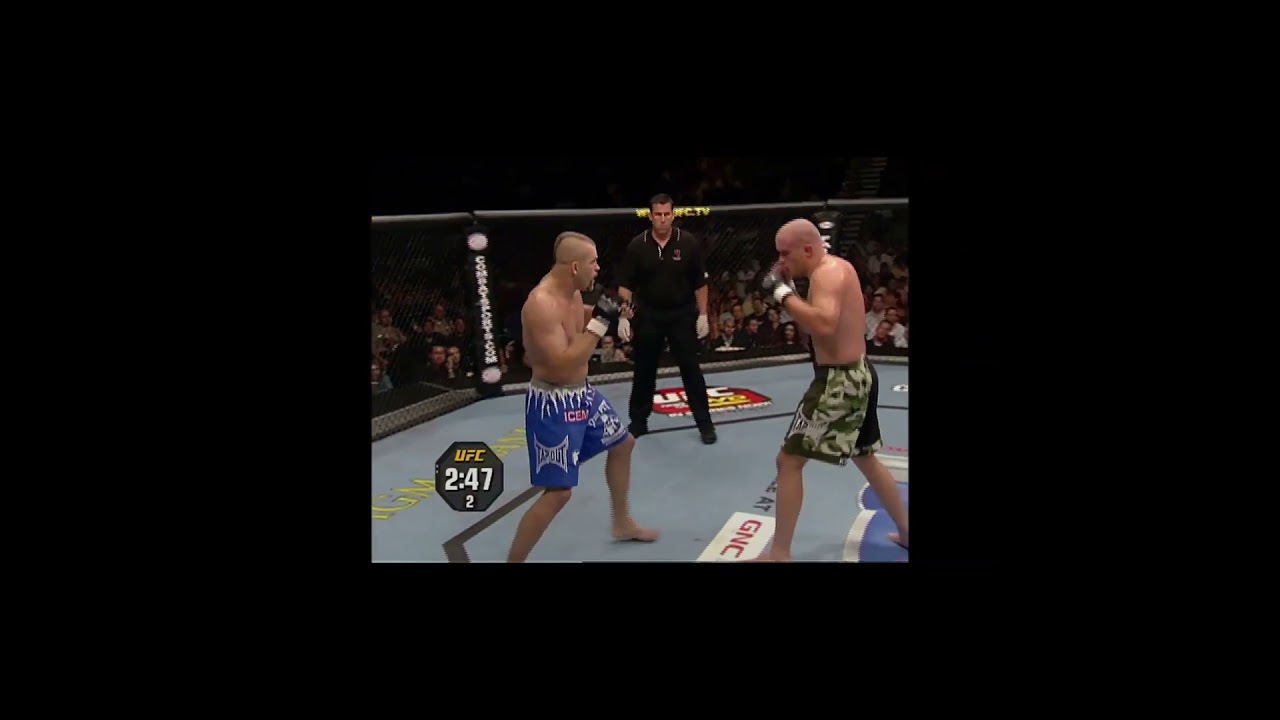
This next thing that Georges St. Pierre does, however, is the shit that legends are made of. Not that he hadn’t already cemented himself as the best in the division’s history and one of the best fighters of all time. He wanted more. When GSP left the sport, he cited multiple reasons. His body was beat up from fighting, his mind was beat up from the pressures of being a UFC Champion, he had personal problems to deal with in his own life, and he thought that a lack of drug testing in the UFC was making it unfair for honest fighters to compete. GSP was never the biggest welterweight in the world. During his legendary run of title defenses, Georges was about 185-190 when he stepped into the cage. The welterweight limit is 170 for champions so 20 pounds up may sound like a lot, but it actually wasn’t a lot of weight to gain compared to a lot of other fighters competing. This topic will come up again.
Comeback stories in fighting often don’t go well. TJ Dillashaw’s shoulder wanted to get away from him. Nick Diaz’s [body] wanted no part of a second Robbie Lawler fight. Funaki added insult to injury when he came back to fight Rickson. Georges St. Pierre was different, though. He doesn’t strike me as the kind of guy who would come back for just a paycheck, or for [more] glory. In 2017, St. Pierre would announce his return to fighting. He would be facing Michael Bisping, the then-middleweight champion. The reality of this fight happening was tossed back and forth throughout the year, a lot of people believing it would never happen. In August of 2017 it was made official with both fighters signing their contracts. Epic press conference[s] would take place, and the topic of size would come up more than once.
“I like little guys like Georges St. Pierre”
“He’s always been a little guy”
“You’re talking about being a fucking welterweight, you are a welterweight, and I’m a middleweight.”
“Stand up, look at the size of me, and look at the size of you.”
“I’ll fuck you up now, you little twerp.”
Here are some forum comments from fans in the MMA community, prior to UFC 217:
“I think GSP can’t take him down due to Bisping size and td defense and gets worked on the feet.”
“He can try to jab and shoot all he’d like but Bisping is way bigger, has great boxing and great conditioning.”
“I see bisping winning by being a bigger fighter.”
“i don’t like this fight for GSP. in addition to the size disadvantage, bisping’s TDD is good.”
Here’s one in favor of GSP:
“Size wont matter if St Pierre still has his riddum.”
Georges weighed in at 184.4, and Bisping weighed in at 184.6. Ultimately I believe Bisping had about 10 pounds on GSP, but the difference in body mass mattered about as much as Sakuraba’s opponent when he signed a fight agreement.
We hear the word “trap” all the time. We know what mouse traps are, and we’ve heard that some people somewhere in the world use traps to catch bigger animals. When I hear the word “trap”, I think of it in terms of personal safety, and I keep myself safe by avoiding dark corners and keeping my peripheral vision intact. Traps are important here because in fighting, strategic intelligence and reaction manipulation can separate two men who are relatively close in skill. You can forget about size at this point… Georges St. Pierre, like many others before him, is going to show the world that bigger doesn’t necessarily mean better.
Disclaimer: This may or may not have been GSP’s true gameplan going into the fight against Bisping. I’m not claiming this to be the most professional, or even the best analysis - it’s simply what I observed when watching this fight. These observations included smaller, more specific tactics within, what I’m going to break down will be more broad.
GSP’s performance against Michael Bisping centered around two tactics: